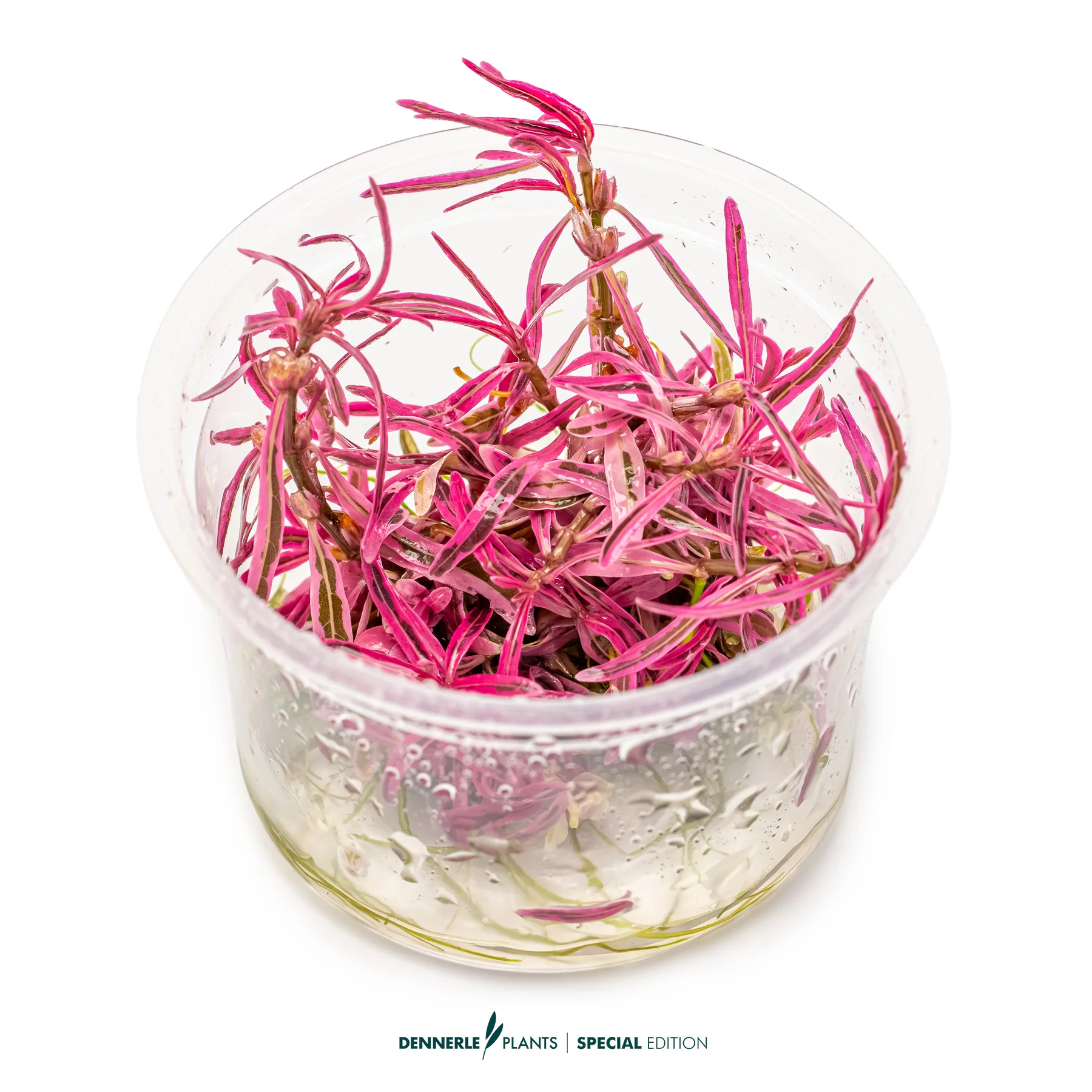
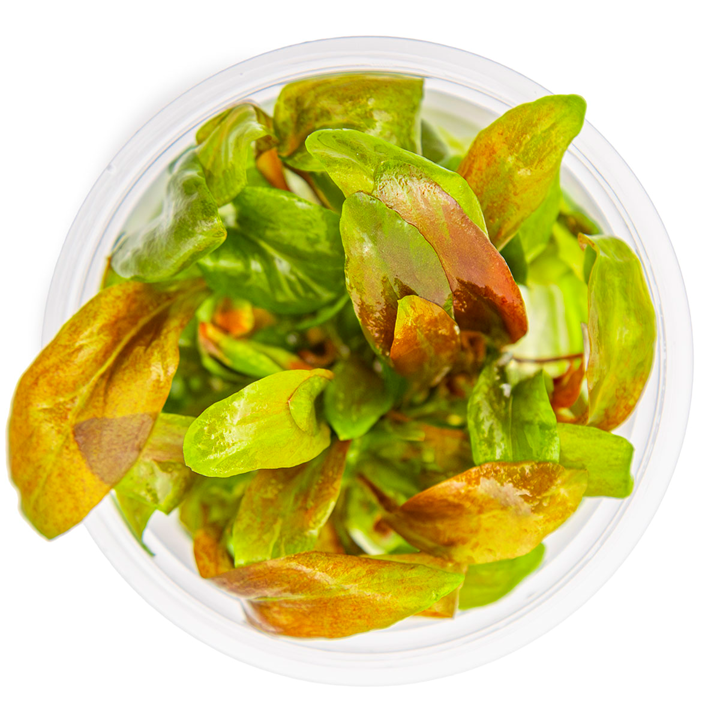
Hygrophila lancea ‘Chai’ is an elite, highly sought-after variegated cultivar famous for its vibrant pastel-pink leaf margins and contrasting green central veins. Originally discovered as a mutation of Hygrophila lancea ‘Araguaia’ at the South Island Aquarium in Singapore, Dennerle Plants now produces this rare gem as a clean, pest-free in vitro tissue culture cup.
Hygrophila lancea ‘Chai’ is an elite, highly sought-after variegated cultivar famous for its vibrant pastel-pink leaf margins and contrasting green central veins. Originally discovered as a mutation of Hygrophila lancea ‘Araguaia’ at the South Island Aquarium in Singapore, Dennerle Plants now produces this rare gem as a clean, pest-free in vitro tissue culture cup.
Because it lacks chlorophyll on its pink edges, it is an expert-level, slow-growing plant that demands precise high-tech conditions to prevent melting or being overtaken by algae.
Plant Profile Overview:
- Position: Foreground to Midground (grows 10–20 cm tall in a spreading, bushy cluster)
- Growth Rate: Extremely slow
- Difficulty: Advanced / Expert
- Lighting: Very High (requires strong PAR levels to trigger its vivid pink hues)
- CO₂ Requirement: High and stable (ideally 30–50 ppm)
- Water Parameters: Soft to moderately hard water, pH 5.0–7.5, and cool temperatures (20–25°C help with stability)
Critical Care & Success Tips:
- Introduce to Mature Tanks Only: Never plant ‘Chai’ in a brand-new aquascape. It is highly sensitive to organic waste and ammonia spikes. A stable, mature biological filter is mandatory to ensure it doesn’t melt away.
- Provide Rich Substrate & Clean Water: It relies heavily on a nutrient-dense aquasoil supplemented with stable water column fertilization (both micro and macronutrients).
- Keep Surrounding Areas Clear: Because it creeps slowly along the substrate, faster-growing stem plants can easily shade it out. Give it plenty of physical space and unobstructed access to intense light.
- Handle In-Vitro Cups Gently: When using the Dennerle in vitro cup, carefully rinse away the nutrient agar gel in lukewarm water. Divide the plant into small portions and use fine aquascaping tweezers to anchor them deeply into the soil. Since tissue cultures have tiny root systems, some hobbyists float the stems for a few days to stimulate early root development before planting.
- Hold Off on Early Trimming: Do not prune or trim the plant until it is completely established and growing steadily. Once it is mature, you can propagate it by taking apical cuttings from the top stems.






Reviews
There are no reviews yet.