
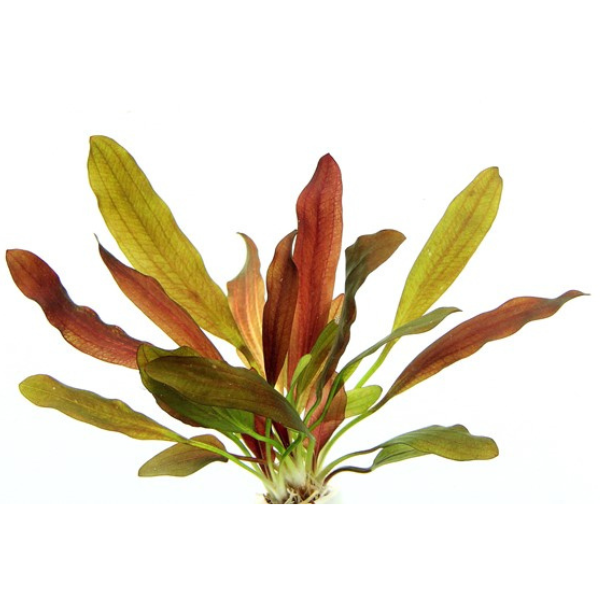
Cyperus helferi is a highly graceful, grass-like aquatic sedge native to Thailand and Southeast Asia. It holds a special distinction as the very first Cyperus species successfully adapted for fully submerged growth in the aquarium hobby. Popularised globally by legendary aquarist Takashi Amano, this elegant plant is prized for its long, ribbon-like leaves that arch outwards and sway beautifully in water currents.
Cyperus helferi is a highly graceful, grass-like aquatic sedge native to Thailand and Southeast Asia. It holds a special distinction as the very first Cyperus species successfully adapted for fully submerged growth in the aquarium hobby. Popularised globally by legendary aquarist Takashi Amano, this elegant plant is prized for its long, ribbon-like leaves that arch outwards and sway beautifully in water currents.
Plant Overview:
- Type: Rosette
- Growth Rate: Slow to Moderate
- Height: 20 to 50 cm
- Width: 15 to 25 cm
- Placement: Midground or Background
Optimal Water Parameters:
- Temperature: 20°C – 28°C (Prefers water on the cooler side; avoid exceeding 30°C)
- pH Range: 5.5 – 7.5 (Thrives in soft, slightly acidic water)
- Water Hardness: 1 – 18° dGH
Cultivation & Care Requirements:
- Lighting: It requires medium to high lighting. While it can survive under low or diffused light, strong lighting prevents the plant from stagnating and keeps the leaves a bright, vibrant green.
- Substrate & Nutrition: Cyperus helferi develops a deep but relatively compact root system. It is a heavy root feeder, meaning it relies heavily on nutrients absorbed through its base. It is best grown in nutrient-rich aquasoil. If planted in inert sand or gravel, you must supplement the substrate with root tabs. Regular dosing of liquid fertilizers containing iron, potassium, and nitrates is also recommended to support leaf health.
- Carbon Dioxide (CO₂): While CO₂ injection is not strictly mandatory, it is highly recommended. Supplementing CO₂ significantly increases its slow growth rate, produces fuller rosettes, and helps prevent opportunistic algae from anchoring to its slow-growing, narrow leaves.
- Adaptation Period: Be patient when first introducing this plant to your aquarium. It can take a long time to adapt to a new aquatic ecosystem, during which growth may seem entirely halted. Once fully established, it grows steadily and vigorously.
Propagation & Maintenance:
- Algae Prevention: Because it grows slowly, old leaves are prone to hair or spot algae. If a leaf becomes covered in algae or begins to decay, use sharp aquascaping scissors to cut it off completely at the very base of the rosette.
- Division: Over time, a healthy, stabilized plant will naturally develop side shoots or small runner plantlets at its rosette base. Simply pull or cut these divisions away from the parent plant, ensuring they have a few roots attached, and press them back into the substrate.






Reviews
There are no reviews yet.