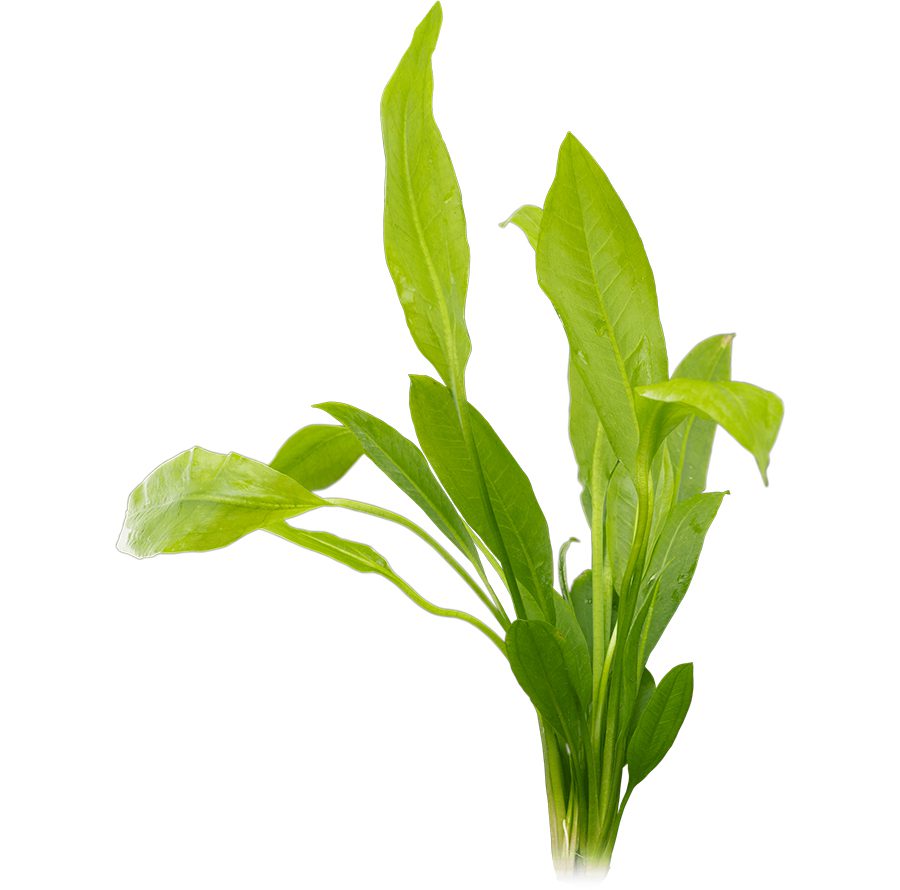
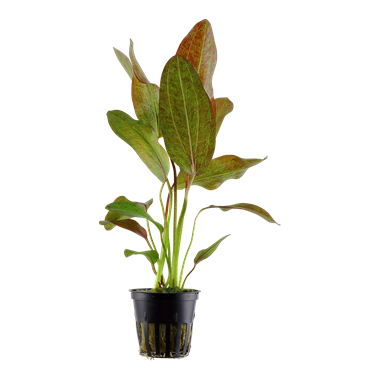
Echinodorus grisebachii ‘Bleherae’ is commonly known as the Broadleaf Amazon Sword or Bleher’s Sword, is one of the most popular, hardy, and iconic background plants in the aquarium hobby.
Native to South America, this robust rosette plant features vibrant green, lanceolate leaves that can quickly turn it into a majestic centerpiece. It is highly recommended for beginners due to its undemanding nature and ability to tolerate a wide range of water conditions.
Quick Care Statistics:
- Placement: Midground to Background
- Height: 25 to 60 cm
- Width: 25 to 40 cm (Rosette diameter)
- Growth Rate: Fast to Moderate
- Lighting: Low to Medium
- Temperature: 22 to 28°C
- pH Range: 6.0 to 7.5
Core Requirements & Planting:
- Heavy Root Feeder: This plant draws the vast majority of its nutrients from its roots. A rich substrate or regular use of root tabs is critical for long-term health.
- Substrate Depth: Ensure your gravel or soil layer is at least 10 cm deep to accommodate its massive, expansive root system.
- Planting Method: Unpot the plant, remove the rockwool, and bury the roots while keeping the crown (where the leaves meet the roots) completely above the substrate to prevent rotting.
- CO2 and Fertilization: Carbon dioxide injection is not required, but it will dramatically accelerate growth.
Maintenance & Trimming:
Because of its fast growth rate, a healthy Broadleaf Sword can easily crowd out a medium-sized tank and shade out smaller foreground plants.
- Cut older, yellowing, or oversized outer leaves directly at the base of the plant.
- Avoid trimming the tops or halves of the leaves, as the damaged leaf will rot.
Propagation:
In a healthy environment, the plant will naturally send out long running stalks (inflorescences). Small adventitious plantlets will develop along these runners. Once these plantlets form their own small root systems, you can snip them off and replant them elsewhere in the substrate.





Reviews
There are no reviews yet.