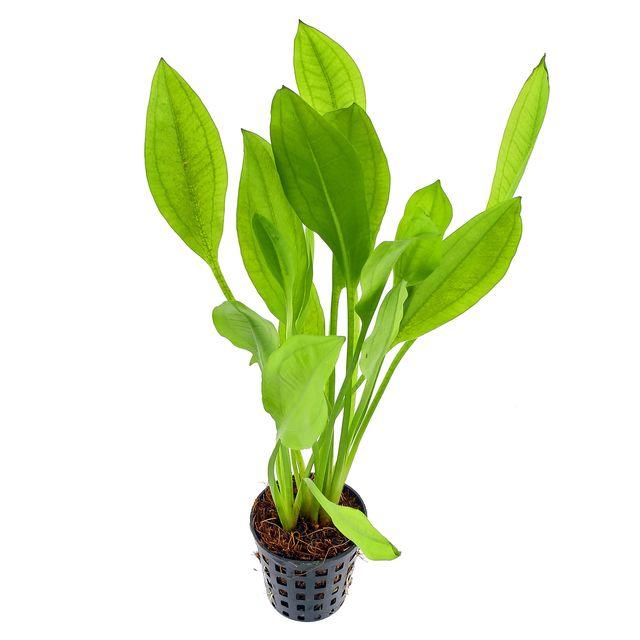
Echinodorus grisebachii ‘Amazonicus’ is commonly known as the Narrow-leaved Amazon Sword, is one of the most classic, resilient, and popular background aquatic plants in the freshwater aquarium hobby. Native to the Amazon Basin in South America, this rosette plant features distinctive, elegant, sword-shaped leaves that can reach heights of 20 to 50+ cm.
Echinodorus grisebachii ‘Amazonicus’ is commonly known as the Narrow-leaved Amazon Sword, is one of the most classic, resilient, and popular background aquatic plants in the freshwater aquarium hobby. Native to the Amazon Basin in South America, this rosette plant features distinctive, elegant, sword-shaped leaves that can reach heights of 20 to 50+ cm.
Key Characteristics:
Compared to its close relative—the broad-leaved E. grisebachii ‘Bleherae’—the ‘Amazonicus’ variant is prized for its more graceful, streamlined aesthetic.
- Leaves: Narrow, lanceolate (lance-shaped), bottle-green blades curving slightly like a sickle.
- Growth Rate: Moderate to fast, regularly producing 1–2 new leaves per week under good conditions.
- Placement: Midground to background placement in medium-to-large tanks (ideally 200 litres or more).
- Aquarium Companions: Highly recommended for South American biotope tanks, especially providing broad cover for Angelfish and Discus.
Care Profiles & Requirements:
- Lighting: Medium to Low, tolerates shade but prefers a bright spot to thrive.
- Water Temperature: 22°C – 28°C
- pH Range: 6.5 – 7.5
- CO2 Demand: Low/Optional, carbon dioxide injection is not strictly required but accelerates growth.
- Substrate Depth: Due to its massive root system,10cm
Feeding and Propagation:
- Heavy Root Feeders: Echinodorus species draw the majority of their nutrients through their roots. Plain gravel or sand will stunt them; they require a nutrient-rich aquarium soil or the regular insertion of root tabs directly underneath the plant base.
- Propagation: Mature, healthy plants naturally produce long flower stalks (inflorescences). Along these stalks, adventitious baby runner plants will form. Once these plantlets develop independent root systems, they can be gently snipped off and replanted into the substrate.




Reviews
There are no reviews yet.