The cherry barb (Puntius titteya) is a small, hardy freshwater fish endemic to the shaded rainforest streams of Sri Lanka. Renowned for its vibrant coloration and gentle disposition, it is one of the most popular and beginner-friendly species in the aquarium hobby.
The cherry barb (Puntius titteya) is a small, hardy freshwater fish endemic to the shaded rainforest streams of Sri Lanka. Renowned for its vibrant coloration and gentle disposition, it is one of the most popular and beginner-friendly species in the aquarium hobby.
Appearance & Sexual Dimorphism:
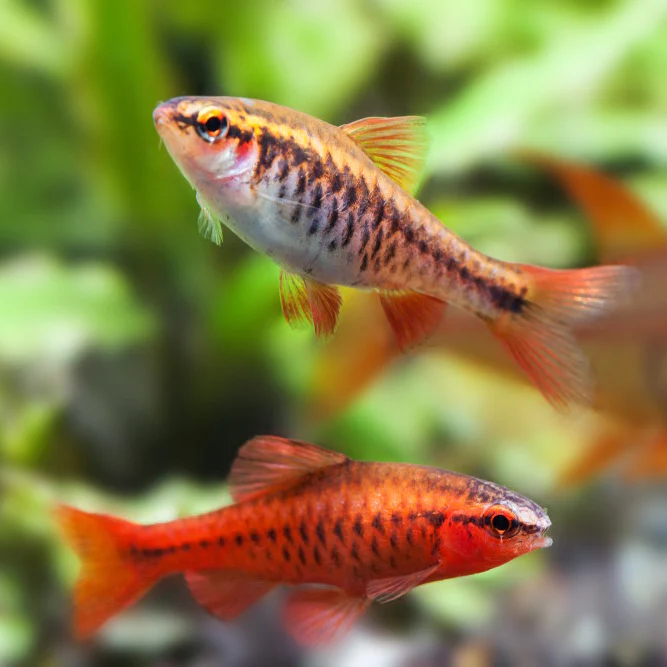
- Males: Display a striking, bright cherry-red to deep crimson hue that intensifies significantly during breeding or when competing for female attention. This vivid red coloration sets the cherry barb males apart.
- Females: Larger, rounder, and noticeably more subdued, featuring an amber-brown, fawn, or tannish-bronze coloration.
- Markings: Both sexes display a distinct dark horizontal lateral stripe running from the snout to the base of the tail, which is a classic feature of cherry barb fish.
- Size: They reach a maximum adult length of up to 5 cm.
Behaviour & Tank Mates:
Unlike notoriously boisterous relatives like the tiger barb, cherry barbs are peaceful, community-oriented schooling fish. Keeping cherry barb in groups helps reveal their natural social behaviors.
- Schooling Size: They must be kept in groups of at least 5 to 6 individuals. Smaller groups can trigger severe shyness and stress.
- Sex Ratio: Maintain a ratio of more females than males (e.g., 2:1) to prevent males from exhausting females during spawning pursuits.
- Ideal Mates: They pair excellently with other peaceful nano fish, including tetras, rasboras, danios, and small bottom-dwellers like Corydoras catfish, all companions well suited for cherry barb tanks.
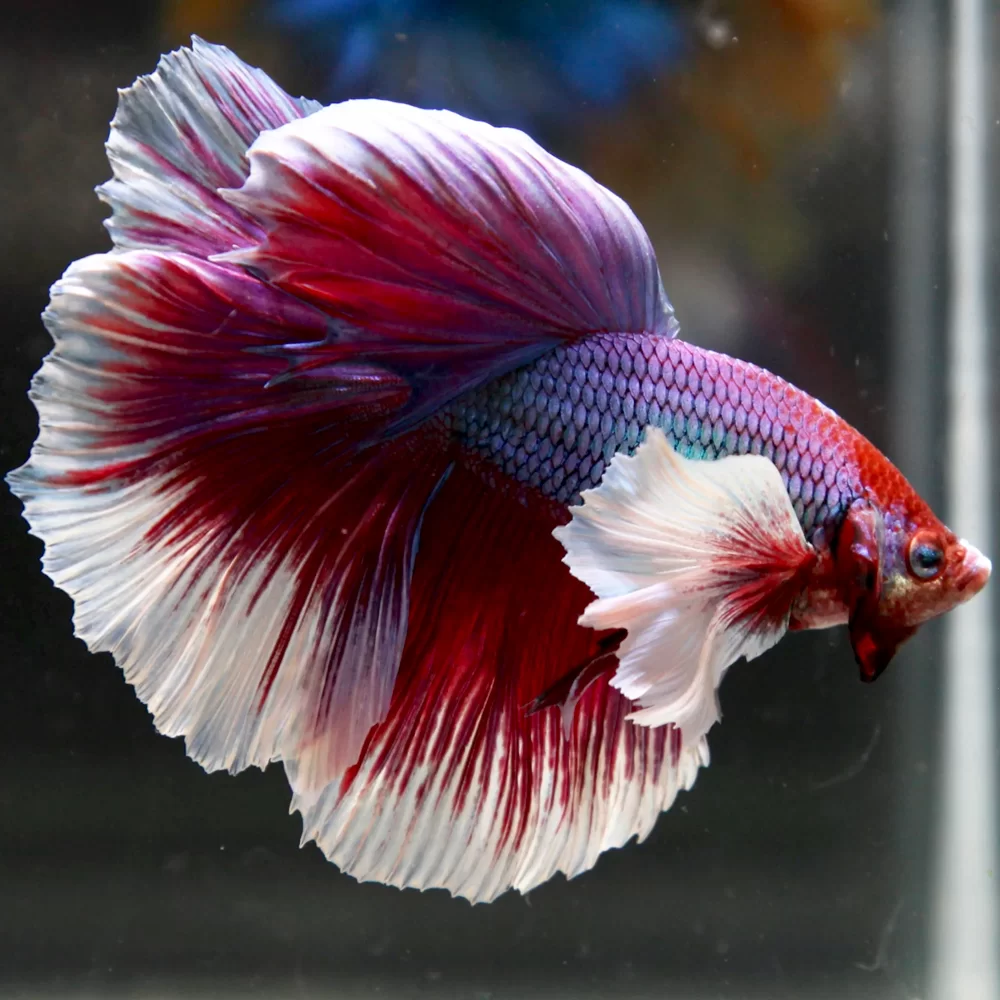
- Fish to Avoid: Do not house them with aggressive species or large predatory fish that can swallow them. Avoid slow-moving, long-finned fish like bettas, as minor fin-nipping can occasionally occur.
Aquarium Requirements:
- Tank Size: A minimum of 30–75 litres to allow ample swimming space.
- Water Temperature: 22°C to 28°C.
- pH Range: 6.0 to 8.0 (slight acidity mirroring their natural blackwater streams is preferred).
- Aquascaping: Dense live plants, floating vegetation, and driftwood provide crucial cover, which reduces stress and coaxes out their brightest colouration—the ideal display for cherry barb enthusiasts.
Diet & Nutrition:
Cherry barbs are highly opportunistic omnivores. They thrive on a varied diet consisting of high-quality tropical flakes, micropellets, and routine supplements of live or frozen foods like daphnia, brine shrimp, and bloodworms. Providing plant-based or vegetable matter helps replicate the natural wild grazing habits of the cherry barb and ensures balanced nutrition.

Reviews
There are no reviews yet.