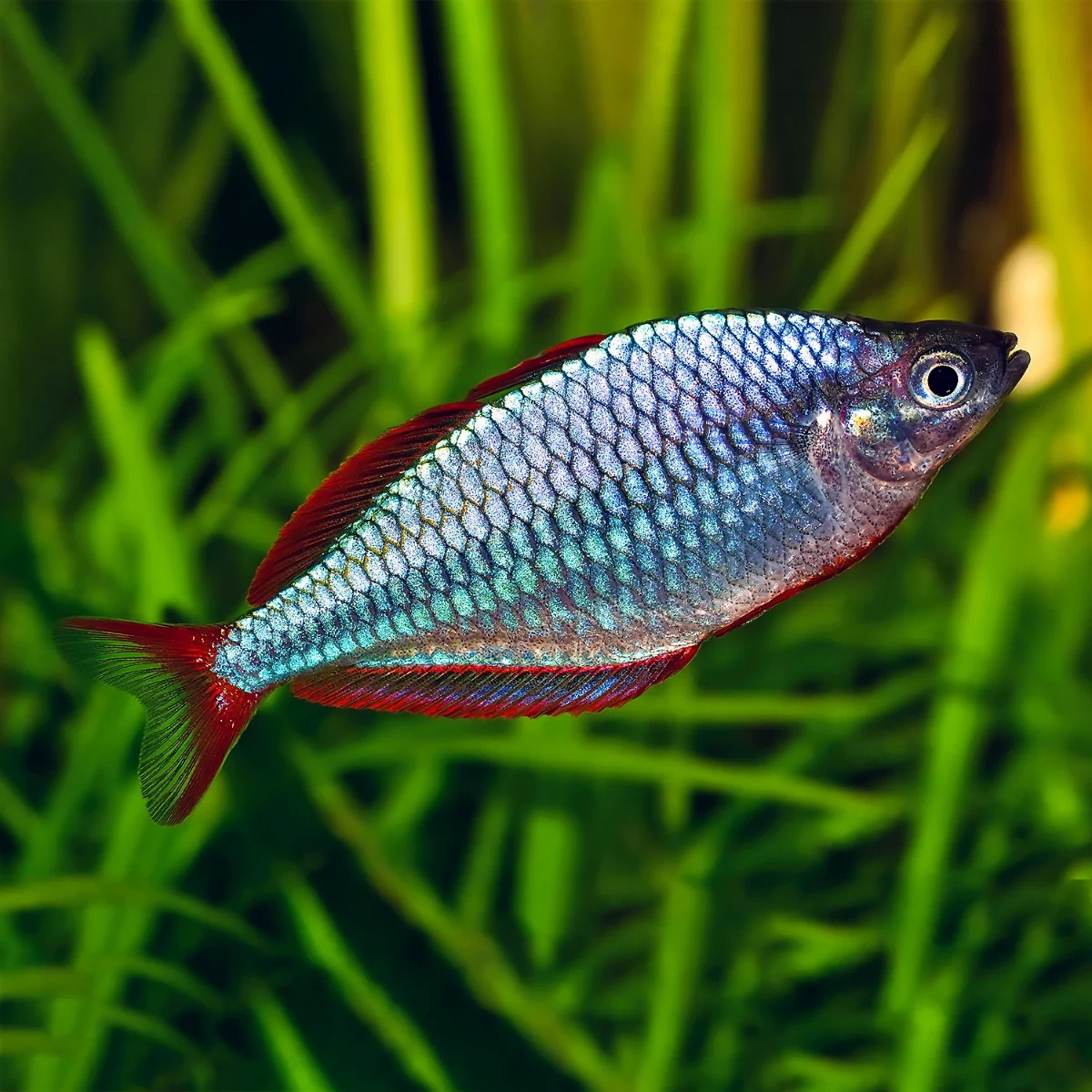
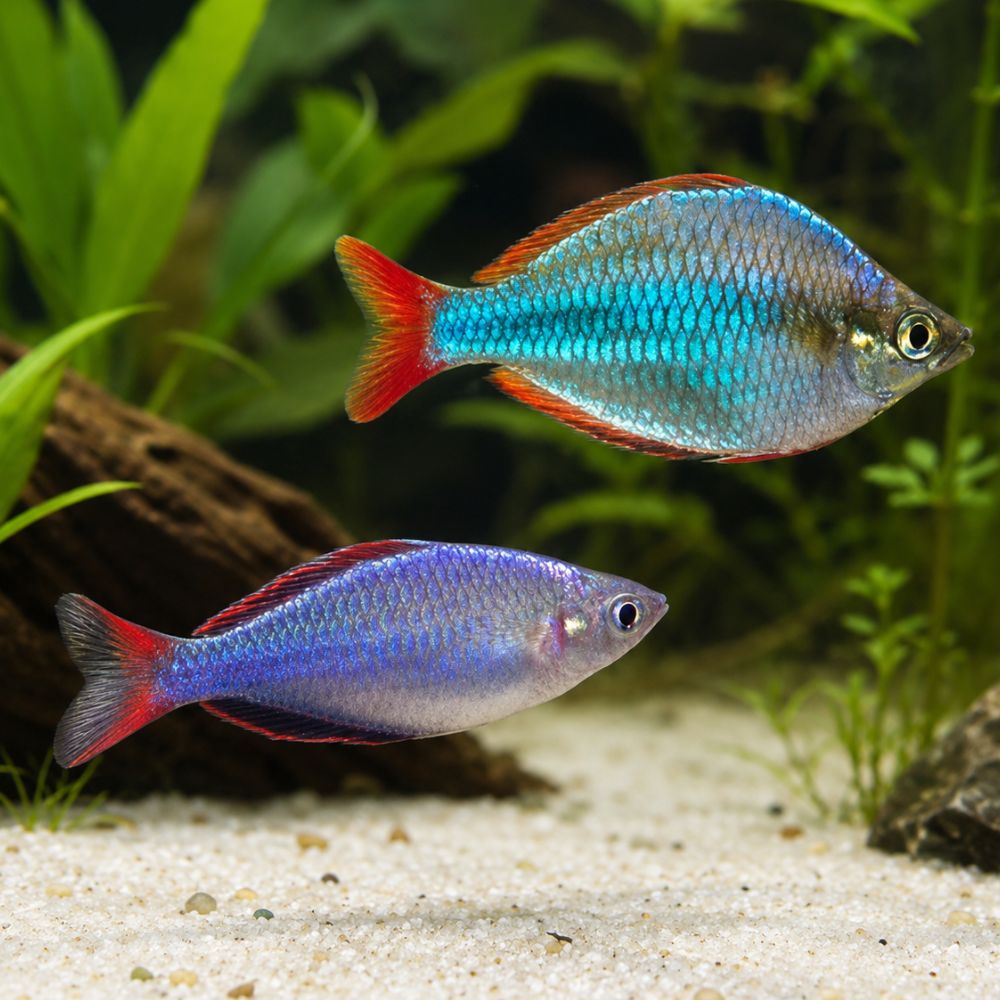
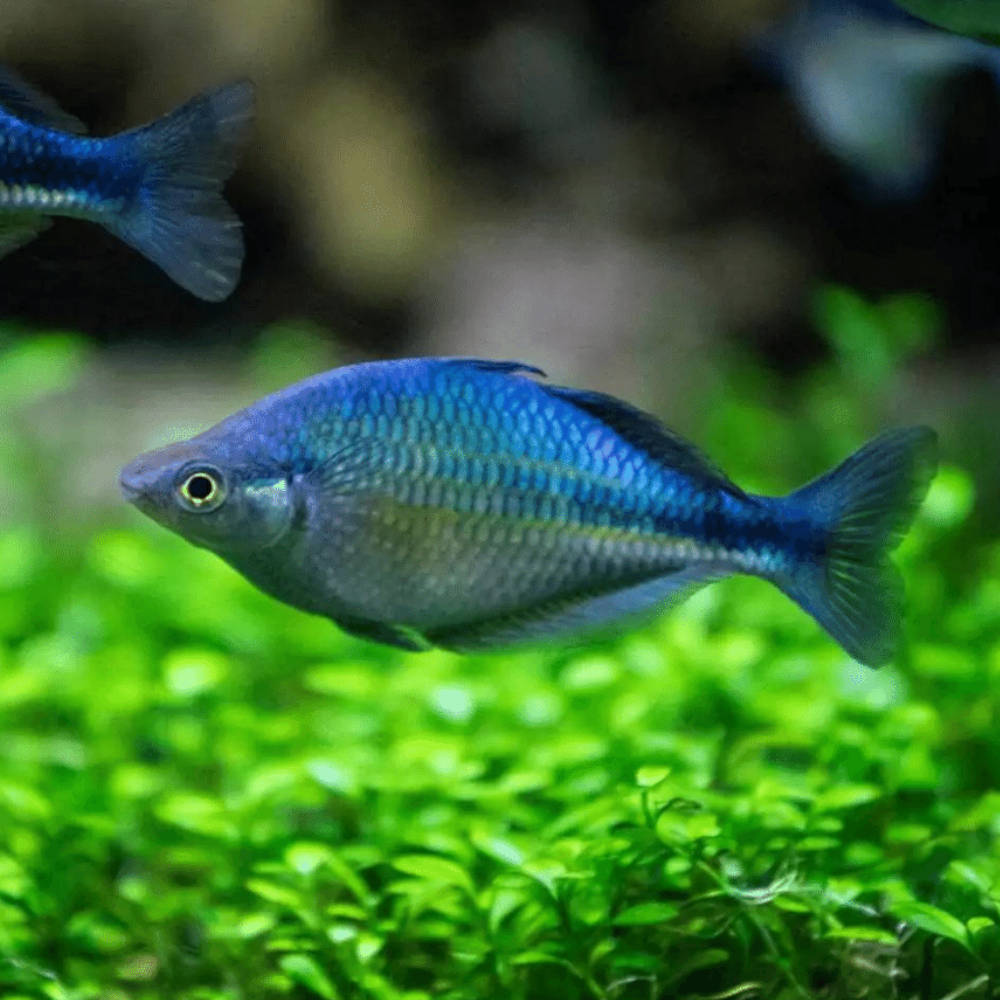
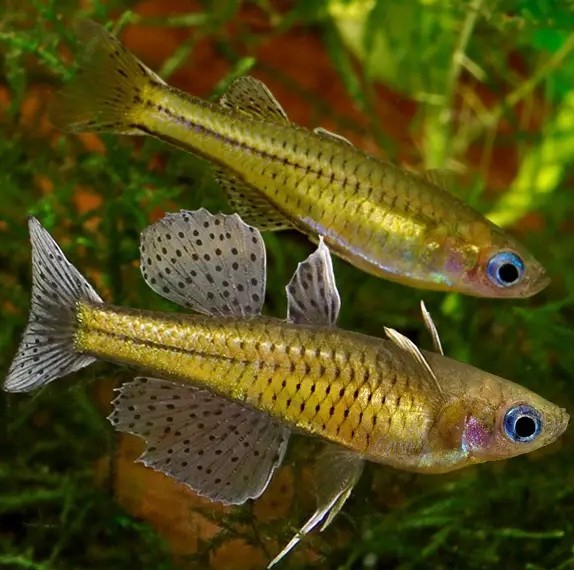
The Dwarf Neon Rainbowfish (Melanotaenia praecox) is also known as the Praecox Rainbowfish, is a peaceful, active freshwater schooling fish native to the Mamberamo River system in Papua, New Guinea. Prized for its shimmering metallic-blue scales and contrasting fins, it is one of the smallest and most colourful rainbowfish suited for community aquariums.
The Dwarf Neon Rainbowfish (Melanotaenia praecox) is also known as the Praecox Rainbowfish, is a peaceful, active freshwater schooling fish native to the Mamberamo River system in Papua, New Guinea. Prized for its shimmering metallic-blue scales and contrasting fins, it is one of the smallest and most colourful rainbowfish suited for community aquariums.
Quick Profile:
- Adult Size: Typically grows to 6–7.5 cm (2.5–3 inches).
- Lifespan: 3–5 years on average in a well-maintained aquarium (up to 7+ years with optimal care).
- Sexual Dimorphism: Males develop a deeper body shape, intense neon-blue iridescence, and bright red-orange fins. Females are slimmer with a silvery-blue sheen and yellow or pale-orange fins.
- Temperament: Peaceful, energetic mid-to-upper water swimmers.
Tank & Water Requirements:
- Tank Size: Minimum 60–80 litres for a small group, though a longer tank (at least 60–90 cm) is strongly preferred to accommodate their active swimming style.
- Water Parameters: Temperature of 23–27°C, pH between 6.5 and 7.5, and moderate water hardness (5–15 dGH). They are sensitive to poor water quality, so strong filtration, good oxygenation, and regular water changes are essential.
- Aquascape: Thrives in planted tanks with open horizontal swimming space, driftwood, and a darker substrate to make their metallic blue scales stand out.
Social Behaviour & Tank Mates:
- Schooling Needs: Keep them in groups of at least 6 to 8 individuals. Maintaining a ratio of 1–2 females per male helps disperse male sparring during morning spawning displays.
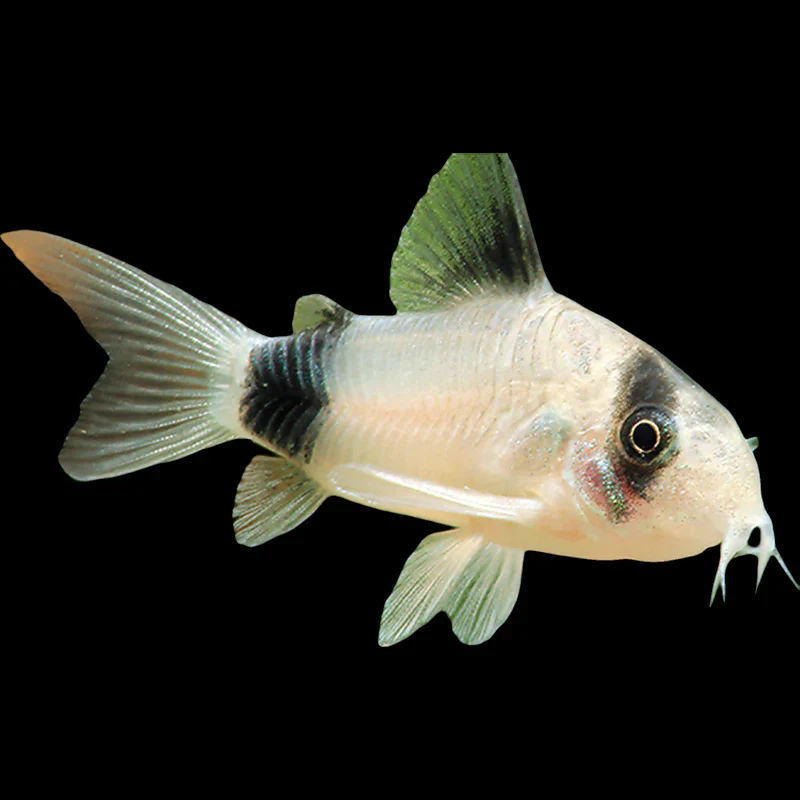
- Compatible Tank Mates: Pairs well with peaceful, active community fish of similar size, such as tetras, harlequin rasboras, Corydoras catfish, bristlenose plecos, livebearers, and peaceful dwarf cichlids.
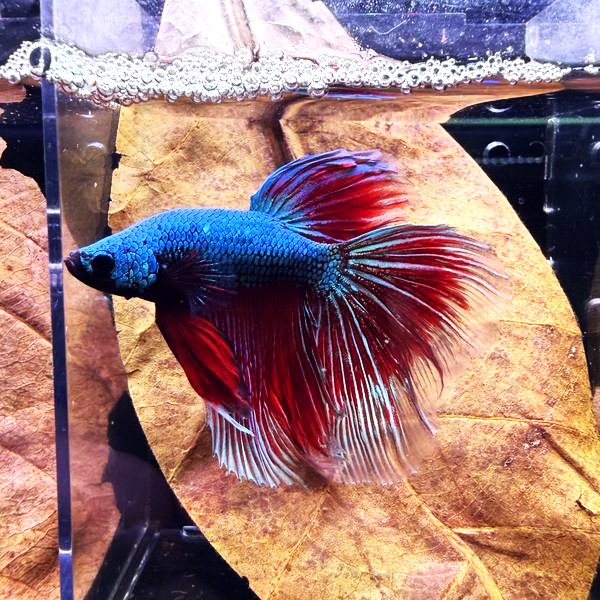
- Fish to Avoid: Avoid housing them with aggressive fin-nippers (like tiger barbs) or very slow, long-finned fish (like bettas or fancy guppies) that may be stressed by their constant motion.
Diet & Breeding:
- Diet: Greedy omnivores that readily accept high-quality flakes, micro-pellets, and crushed granules. Supplementing with frozen or live foods like brine shrimp, daphnia, and bloodworms keeps their colours vibrant.
- Breeding: Continuous egg-scatterers that spawn easily in the morning over fine-leaved plants or spawning mops. Because adults will eat the eggs, move the spawning mop to a separate grow-out tank; eggs hatch in 7–10 days, and the tiny fry require infusoria or liquid fry food before transitioning to baby brine shrimp.




Reviews
There are no reviews yet.