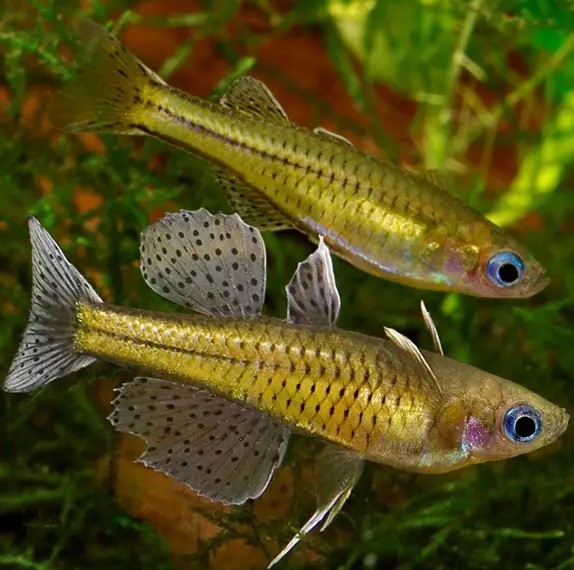
The Spotted Blue-Eye Rainbow (Pseudomugil gertrudae) is a delicate nano-fish native to Australia and New Guinea. Growing up to 3.5 cm, males feature striking iridescent blue eyes and large, golden fins marked with black spots. Thriving in planted aquariums, they are peaceful but short-lived.
The Spotted Blue-Eye Rainbow (Pseudomugil gertrudae) is a delicate nano-fish native to Australia and New Guinea. Growing up to 3.5 cm (1.4 inches), males feature striking iridescent blue eyes and large, golden fins marked with black spots. Thriving in planted aquariums, they are peaceful but short-lived.
Tank Setup & Water Parameters:
- Tank Size: At least 40L is recommended to keep a small shoal.
- Temperature: Keep the water stable between 21°C to 28°C.
- pH Level: Best maintained between 5.5 and 7.5, as they prefer neutral to slightly acidic conditions similar to their wild habitats.
- Environment: They love heavily planted tanks with floating plants to provide natural cover and diffuse lighting.
Diet & Feeding:
Because of their small mouths, you should feed them tiny foods. Good options include:
- Micro pellets or crushed flakes. Try our Dennerle Complete Gourmet Menu (200ml) or Dennerle Nano Gran – Nano Fish Food (100ml)
- Live or frozen micro worms.
- Baby brine shrimp. Try our Aquaforest Liquid Artemia Freshwater – 250ml
Tank Mates:
Spotted Blue-Eyes are a shoaling fish and must be kept in groups of at least 8 to 10 to feel secure. They are peaceful but timid, so they do best in a species-only tank or paired with other tiny, non-aggressive nano fish (like smaller tetras or shrimp).

Reviews
There are no reviews yet.