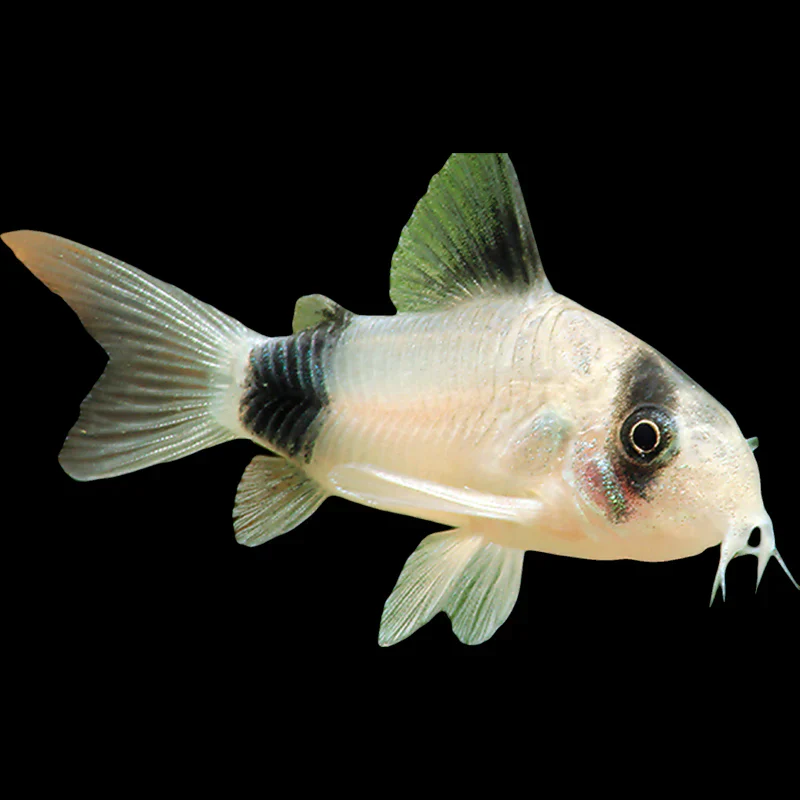
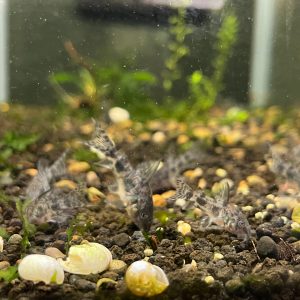
The Panda Corydoras (Corydoras panda or Hoplisoma panda) is a small, highly social, and peaceful freshwater catfish popular in the aquarium hobby. Named after the giant panda due to the distinctive black patches over its eyes and tail base, this bottom-dweller is prized for its playful “wiggle” dances and helpful substrate-cleaning behaviour.
Care Overview:
- Tank Size: Minimum 60 litres to maintain water stability.
- Group Size: Must be kept in a school of 6 or more. They can become stressed and sick if kept alone.
- Substrate: Soft, fine sand is mandatory. Coarse or sharp gravel damages their highly sensitive mouth barbels.
- Behaviour: Exceptionally peaceful bottom-dwellers that spend their day sifting through sand for food. They occasionally dart to the surface for a quick gulp of air, which is entirely normal intestinal breathing.
Ideal Water Parameters:
- Temperature: 22°C to 25°C is optimal, though captive-bred variations tolerate up to 28°C.
- pH Range: 6.0 to 7.4.
- Hardness: 2 to 12
- Water Quality: High sensitivity to nitrates and fluctuating parameters. They require an established, fully cycled aquarium.
Diet and Feeding:
Panda Corydoras are omnivorous scavengers. They will eat leftover food but cannot survive on waste alone. Ensure targeted nutrition reaches the bottom of the tank using:
- High-quality sinking catfish pellets or wafers
- Live or frozen bloodworms, brine shrimp, and daphnia
Tank Mates:
They are perfect for community tanks alongside small, non-aggressive species. Great choices include tetras, rasboras, dwarf gouramis, and snails. Avoid large or aggressive tank mates that might treat them as food or outcompete them during feeding time.


Reviews
There are no reviews yet.