
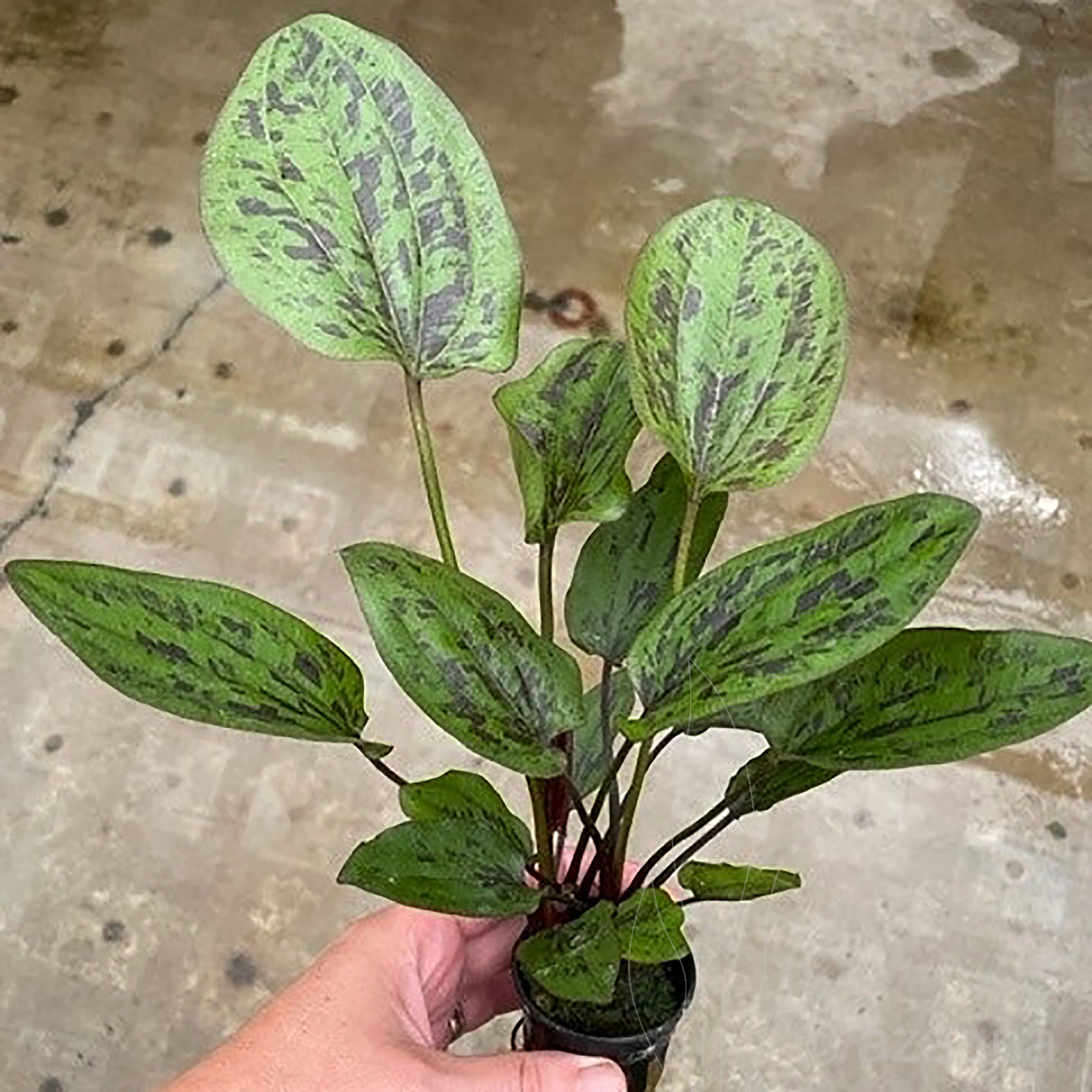
Echinodorus ‘Chocolate Marble’ is a striking and relatively new hybrid Amazon sword plant prized for its highly variegated, blotched leaf pattern. It features broad, emerald-green leaves splashed with rich chocolate-brown, burgundy, and deep green marbling. Young, newly emerging leaves often display a bright brownish-pink or dark red tone before maturing. It is a hardy, beginner-friendly plant that adds unique texture and warm contrast to midground or background aquarium zones.
Echinodorus ‘Chocolate Marble’ is a striking and relatively new hybrid Amazon sword plant prized for its highly variegated, blotched leaf pattern. It features broad, emerald-green leaves splashed with rich chocolate-brown, burgundy, and deep green marbling. Young, newly emerging leaves often display a bright brownish-pink or dark red tone before maturing. It is a hardy, beginner-friendly plant that adds unique texture and warm contrast to midground or background aquarium zones.
Plant Overview:
- Care Level: Easy. Very forgiving and hardy for beginners.
- Placement: Midground to Background.
- Size: Typically grows around 30 to 45 cm tall, making it best for medium to large aquariums.
- Growth Rate: Slow to moderate.
Care & Tank Parameters:
- Lighting: Moderate to high. While it tolerates lower light, strong lighting significantly enhances the marble pattern and rich chocolate colour contrast.
- Water Temperature: 20°C to 28°C.
- Water pH: 6.0 to 7.5. It adapts well to both medium-soft and hard water.
- CO₂ Requirement: Not strictly required. However, CO₂ supplementation promotes faster, more vibrant growth.
Feeding & Substrate Requirements:
- Heavy Root Feeder: Like all sword plants, it absorbs most nutrients through its roots. It requires a nutrient-rich aquarium soil or regular supplementation with root tabs pushed deep into the substrate.
- Planting Depth: Do not bury the plant’s rhizome too deeply in the substrate, or it may rot.
Maintenance & Propagation:
- Trimming: Periodically prune older, yellowing, or decaying leaves at the base to clear space for new growth and prevent it from shading smaller companion plants.
- Propagation: Very straightforward. It reproduces by growing adventitious plantlets on running stems or via rhizome division, which can simply be separated and replanted.



Reviews
There are no reviews yet.