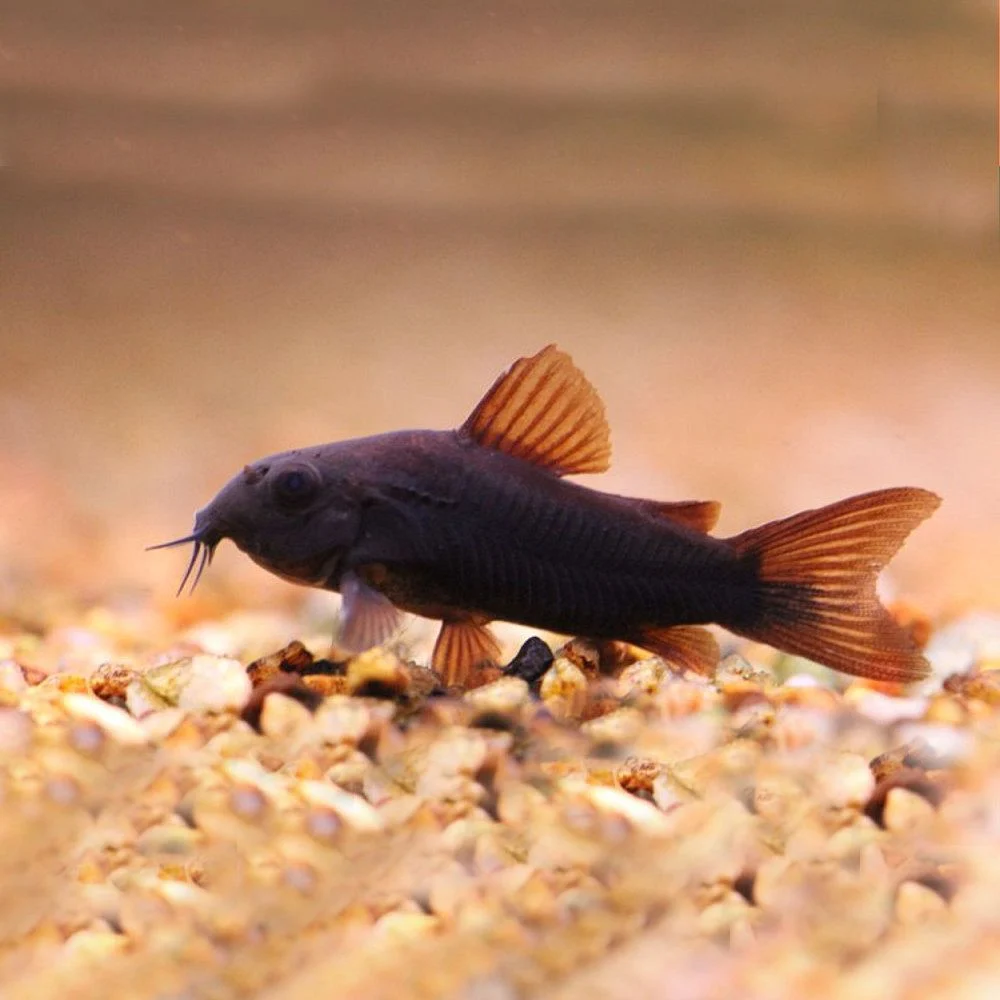
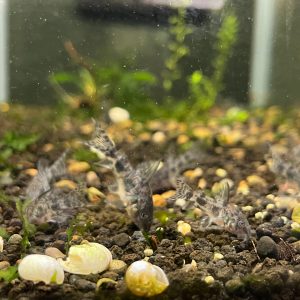
The Black Venezuelan Corydoras (Corydoras schultzei, often commercially reclassified as Osteogaster schultzei) is a striking and highly sought-after freshwater catfish celebrated for its deep, velvety jet-black to dark maroon body. Despite its common name, this unique colour morph is actually a selectively line-bred variant developed by German aquarists in the 1990s from the Gold Flash Corydoras, which is native to Peru—not Venezuela.
The Black Venezuelan Corydoras (Corydoras schultzei, often commercially reclassified as Osteogaster schultzei) is a striking and highly sought-after freshwater catfish celebrated for its deep, velvety jet-black to dark maroon body. Despite its common name, this unique colour morph is actually a selectively line-bred variant developed by German aquarists in the 1990s from the Gold Flash Corydoras, which is native to Peru—not Venezuela.
Key Characteristics:
- Colouration: A uniform charcoal-to-black base often accented by deep bronze, dark brown, or orange highlights that develop more vibrancy as they mature. Their depth of colour is highly environmental; keeping them on dark sand substrates brings out their deepest, richest blacks.
- Behaviour: They are incredibly peaceful, active, and social bottom-dwellers. They are famous for their endearing group behaviours, including schooling, synchronized foraging, and rapidly darting to the surface to gulp air (intestinal breathing).
- Size & Lifespan: They typically reach an adult size of about 6 to 7.5 cm and can live up to 6 years under proper care.
Tank Setup & Parameters:
- Substrate: A soft sand substrate is mandatory. Coarse gravel or sharp rocks will erode their highly sensitive sensory barbels, leading to infections.
- Tank Size: Minimum 50 to 60 litres for a single-species group, though a larger aquarium is recommended for a community setup. Keep an open water surface gap so they can safely breathe air.
- Environment: Incorporate plenty of driftwood, caves, and live plants (such as mosses or ferns) to create shaded zones and resting spots.
- Water Conditions: Temperature of 22–28°C, pH of 6.0–7.5, and clean, well-oxygenated water with a gentle flow.
- Schooling: They must be kept in groups of at least 5 to 6+ individuals. Isolating them or keeping them in pairs causes immense stress and hiding behaviour.
- Diet: As natural omnivorous foragers, they scavenge the aquarium floor but should not be left to survive on waste alone. Provide high-quality sinking carnivore pellets, catfish wafers, and regular treats of protein-rich live or frozen foods like bloodworms, blackworms, and brine shrimp.
- Tank Mates: Excellent additions to peaceful community tanks. They pair beautifully with nano fish, tetras, rasboras, dwarf cichlids, and angelfish.
Breeding Quick Facts:
They are relatively easy to breed at home. Spawning is traditionally triggered by a drop in barometric pressure combined with a large, cool water change to mimic the arrival of the rainy season. The parents perform a classic “T-position” spawning layout, depositing highly adhesive eggs onto the glass corners or stiff plants. Eggs should be removed to a separate container with circulation to hatch after 3 to 4 days, as adults will readily eat their own eggs and fry.
Reviews
There are no reviews yet.